Handkerchief
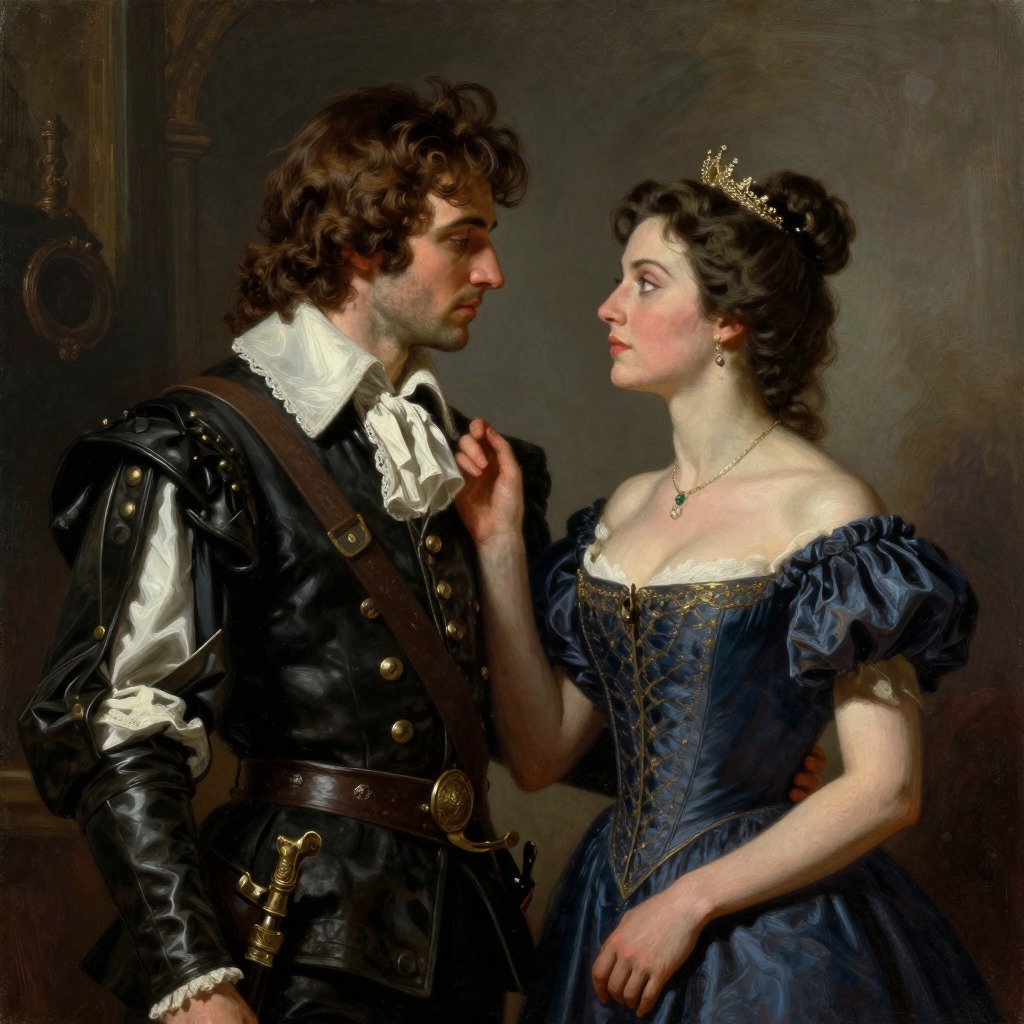
The handkerchief is a small, personal object that, in the world of Alexandre Dumas's novel, carries immense weight. It is not merely a piece of fabric but a token of identity, a weapon of social combat, and a clue to a clandestine network of affairs. Its most famous appearance occurs early in the story, setting off a chain of misunderstandings that define the relationships among the four friends and their adversaries.
Appearance and Initial Significance
The handkerchief first appears in Chapter 4, "The Shoulder of Athos, the Baldric of Porthos and the Handkerchief of Aramis." D'Artagnan, in his headlong rush through M. de Treville's antechamber, observes Aramis drop a handkerchief. He picks it up and returns it, only to find it is richly embroidered with a coronet and coat of arms. This seemingly courteous act immediately embroils him in a dangerous social game. The handkerchief is not Aramis's own; he claims it belongs to a lady, and its discovery threatens to expose a secret liaison. The incident nearly provokes a duel between d'Artagnan and Aramis, establishing the handkerchief as an object that can ignite conflict and reveal hidden truths.
A Token of Love and a Source of Jealousy
The handkerchief reappears as a crucial piece of evidence in the developing romance between d'Artagnan and Constance Bonacieux. When d'Artagnan rescues Constance from the mousetrap in her own home, he finds a fine cambric handkerchief on the floor. He recognizes the same cipher on it that he had seen on the handkerchief that nearly caused his duel with Aramis. This discovery links Constance to the same secret circle of the queen's intimates, deepening the mystery and intensifying d'Artagnan's fascination with her. The handkerchief thus becomes a tangible connection between his love for Constance and the larger political and romantic intrigues of the court.
A Symbol of Deception and Revelation
The handkerchief's role as a symbol of hidden truths is further developed in the relationship between d'Artagnan and Milady. When d'Artagnan, disguised as the Comte de Wardes, spends the night with Milady, she gives him a magnificent sapphire ring. Later, Athos recognizes the ring as a family heirloom he had given to his wife—the woman he believed he had executed for being branded with a fleur-de-lis. This revelation, triggered by the ring (a close cousin to the handkerchief as a personal token), exposes Milady's true identity as Athos's wife and confirms her as a figure of profound treachery. The handkerchief, like the ring, is a personal object that, when misused or recognized, can unravel carefully constructed deceptions.
The Handkerchief as a Narrative Device
Beyond its specific appearances, the handkerchief functions as a classic narrative device in the adventure genre. It is a small, portable object that can be lost, found, stolen, or recognized, creating coincidences and driving the plot forward. Its embroidered cipher and coat of arms make it a unique identifier, linking characters to secret networks and hidden pasts. The handkerchief's ability to cause a duel, expose a love affair, or connect a character to a larger conspiracy demonstrates how Dumas uses material objects to create suspense, reveal character, and advance the intricate plot of The Three Musketeers.